The Intersection of AI and Cybersecurity: A Modern Approach
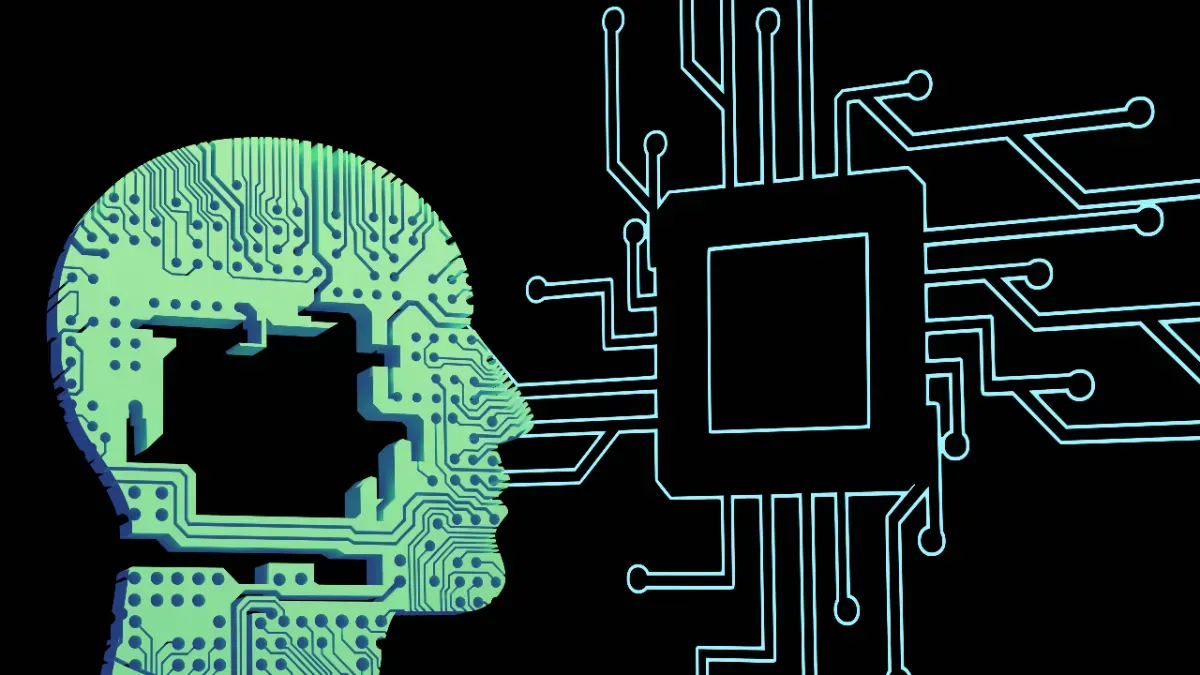
Artificial intelligence is no longer a futuristic concept in cybersecurity — it is the present reality reshaping how organizations defend against an ever-expanding threat landscape. As we navigate 2026, the convergence of AI and cybersecurity has moved from experimental to essential. Machine learning models now detect threats in real-time, slash false positive rates that once paralyzed security teams, and continuously adapt to attack vectors that evolve at machine speed. With cybercriminals increasingly leveraging AI to automate reconnaissance, generate convincing deepfakes, and orchestrate supply chain compromises, AI-driven defense mechanisms are no longer optional. They are the backbone of protecting critical infrastructure, enterprise data, and digital trust.
The New Threat Landscape: Why Traditional Defenses Fall Short
The cybersecurity environment of 2026 is defined by unprecedented complexity. Remote and hybrid work models, multi-cloud architectures, and sprawling IoT ecosystems have dramatically widened the attack surface. Meanwhile, adversaries have grown more sophisticated, exploiting interconnected systems and trusted integrations rather than attempting direct breaches.
According to IBM's X-Force Threat Intelligence Index 2026, major supply chain and third-party breaches have quadrupled over the past five years. Attackers have realized they don't need to break through a carefully guarded front door when they can walk right in through a supplier's back door with valid credentials. Modern software is built on sprawling webs of dependencies, cloud services, and APIs — creating cascading risks that traditional perimeter-based defenses simply cannot address.
Compounding this challenge, AI-powered threats are evolving rapidly. Cybercriminals now use AI to generate sophisticated phishing emails, create convincing deepfakes for executive impersonation, automate vulnerability discovery, and enhance social engineering campaigns. These AI-enabled threats are becoming increasingly difficult to detect using conventional signature-based security technologies.
Real-Time Threat Detection: The Speed Advantage of Machine Learning
At the heart of AI-driven cybersecurity is the ability to process and analyze massive volumes of data at speeds no human analyst can match. Machine learning models ingest security telemetry from endpoints, networks, cloud workloads, email systems, and identity providers — correlating events across these domains in seconds to identify anomalous patterns indicative of malicious activity.
Traditional intrusion detection systems (IDS) rely on predefined signatures and rules, meaning they can only catch known threats. Machine learning, by contrast, establishes behavioral baselines for users, devices, and network traffic. When deviations occur — such as unusual login attempts at odd hours, unauthorized data transfers, or unexpected system misconfigurations — AI models flag them for investigation or trigger automated responses immediately.
This shift from reactive to real-time protection is transformative. In 2026, organizations are investing heavily in AI-powered Security Operations Centers (SOCs) that reduce alert fatigue, accelerate investigations, and improve detection accuracy. Extended Detection and Response (XDR) platforms exemplify this approach, collecting and correlating telemetry across multiple sources to identify sophisticated attack patterns that would otherwise go unnoticed in siloed tools.
Taming the False Positive Crisis
One of the most persistent challenges in cybersecurity has been the overwhelming volume of false alerts. A 2022 survey from King Khalid University found that up to 99% of alerts generated by conventional network intrusion detection systems are false positives. In enterprise IT environments, this produces crippling alert fatigue. In operational technology (OT) and industrial control system environments, spurious alarms can trigger emergency process shutdowns, halting production lines and disrupting safety instrumentation — consequences that dwarf the cost of the underlying cybersecurity risk.
AI is directly addressing this crisis through several innovative approaches:
Hybrid and Ensemble Architectures
By combining multiple machine learning models — such as deep neural networks with classical algorithms like random forests or gradient boosting — ensemble systems achieve higher precision. These architectures extract richer internal representations before final classification, substantially improving the signal-to-noise ratio.
Alert Correlation and Contextualization
Rather than evaluating alerts in isolation, AI systems analyze temporal and logical relationships between events. A three-phase pipeline — comprising alert normalization, preliminary filtration with priority ranking, and causal-relationship graph construction — eliminates false positives that lack correlation with other events. This is particularly valuable for deterministic OT protocols like Modbus or DNP3, where legitimate session sequences follow predictable patterns.
Dynamic Baseline Thresholding
Modern AI systems compute noise metrics from observed event frequencies and derive dynamic detection thresholds. Sensors only trigger alerts when event counts exceed statistically-derived thresholds, directly suppressing environmentally-driven false positives from variable but legitimate traffic spikes.
Explainable AI (XAI)
In critical infrastructure environments, operators cannot act on binary alarms without understanding what triggered them. Techniques like SHAP (Shapley values) quantify each feature's contribution to model output, allowing operators to audit and reject flagged events where contributing features are known to be operationally innocuous. Research from Lebanese American University achieved over 94% true positive and true negative rates using SHAP-based interpretable intrusion detection.
Generative AI for Alert Suppression
Emerging research integrates Generative AI into SOC workflows to automatically suppress false alerts based on analyst feedback. By treating false positive anomalies as "items" in a recommender system, these approaches learn from historical analyst decisions and systematically reduce recurring false patterns.
Adapting to Evolving Attack Vectors: The Arms Race
The most significant challenge in modern cybersecurity is that threats do not stand still. Attackers continuously refine their techniques, develop new exploits, and leverage emerging technologies. Static defense mechanisms inevitably fall behind.
AI addresses this through continuous learning and adaptation:
-
Behavioral Baseline Modeling: AI systems continuously update their understanding of normal behavior across the network. As legitimate traffic patterns evolve — due to software updates, new employee onboarding, or infrastructure changes — the baseline adapts without requiring full model retraining.
-
Predictive Threat Modeling: Rather than simply reacting to detected anomalies, advanced AI platforms use historical attack data to anticipate future threats. By identifying patterns that preceded previous breaches, these systems can flag vulnerabilities and suspicious activities before they escalate into full-blown incidents.
-
Graph Neural Networks (GNNs): These specialized AI models analyze the topological structure of network communications rather than individual packet features. By training on normal and attack traffic subgraphs, GNNs reduce false positives while detecting novel attack patterns that exploit relationship structures — a method particularly well-suited to OT networks with fixed communication topologies.
-
Agentic AI in SOCs: The emergence of agentic AI is redefining Security Operations Centers. Unlike traditional automation, these intelligent systems can reason, learn, adapt, and execute tasks autonomously. AI agents conduct investigations, gather contextual information, recommend remediation actions, and even coordinate response workflows — enabling security teams to focus on strategic initiatives while the AI handles routine threat hunting and incident triage.
AI-Driven Defense: From Optional to Essential
The notion that AI-enhanced security is a "nice-to-have" competitive advantage is obsolete. In 2026, AI-driven cybersecurity is a fundamental requirement for several reasons:
The Scale Problem
Modern enterprises generate terabytes of security telemetry daily. Human analysts, no matter how skilled, cannot manually review even a fraction of these events. AI is the only viable mechanism for processing this data volume at the speed required to detect and respond to threats before damage occurs.
The Speed of Attacks
Advanced persistent threats (APTs) and ransomware operations can move laterally through a network in minutes. Automated AI response mechanisms — such as isolating compromised devices, revoking compromised credentials, or blocking malicious IP addresses — operate at machine speed, containing breaches before they spread.
The Skills Shortage
The cybersecurity industry continues to face a critical shortage of skilled professionals. Autonomous security platforms leverage AI to perform threat detection, investigation, and response with minimal human intervention, effectively multiplying the capabilities of existing security teams.
Adversarial AI
As cybercriminals deploy their own AI tools, organizations that rely solely on human-driven or rule-based defenses face an insurmountable disadvantage. Only AI-powered defenses can match the speed, scale, and adaptability of AI-powered attacks.
Protecting Critical Infrastructure: The Stakes Are Highest
The intersection of AI and cybersecurity carries particular urgency for critical infrastructure — power grids, water treatment facilities, transportation systems, healthcare networks, and financial infrastructure. These systems face unique challenges:
| Challenge | Description | AI Solution |
|---|---|---|
| OT/IT Convergence | Industrial control systems were historically air-gapped, but digital transformation dissolved these boundaries. | AI bridges the gap, understanding both enterprise IT and specialized OT protocols. |
| Availability Requirements | OT systems prioritize availability and safety over confidentiality. | Precise false positive reduction prevents disruptive spurious alarms. |
| Targeted Threats | Nation-state actors employ multi-stage, stealthy campaigns. | AI correlates subtle indicators across time and systems to detect advanced threats. |
| Regulatory Pressure | Stricter cybersecurity regulations require faster breach reporting. | AI-driven monitoring and automated compliance reporting help meet standards. |
Key Pillars of Modern AI-Driven Cybersecurity
Organizations building AI-enhanced security strategies in 2026 should focus on several foundational pillars:
1. Zero Trust Architecture
The principle of "never trust, always verify" has evolved beyond user authentication to encompass devices, applications, workloads, APIs, and AI systems themselves. Modern Zero Trust architectures continuously validate user identities, device health, access permissions, and application behavior — with AI enabling real-time risk scoring and dynamic access decisions.
2. Extended Detection and Response (XDR)
XDR platforms provide centralized visibility across endpoints, networks, cloud workloads, email, and identity systems. By unifying telemetry in a single platform, XDR eliminates the blind spots created by disconnected security tools and enables AI to identify cross-domain attack patterns.
3. Security Orchestration, Automation, and Response (SOAR)
SOAR platforms automate repetitive security tasks — alert triage, incident enrichment, threat correlation, policy enforcement — freeing analysts to focus on complex investigations. When integrated with AI, SOAR becomes a force multiplier, executing predefined response playbooks at machine speed.
4. Continuous Threat Exposure Management (CTEM)
Rather than periodic vulnerability scans, CTEM focuses on continuously identifying attack paths, prioritizing risks based on exploitability, validating exposures, and improving security posture proactively. AI enhances CTEM by predicting which vulnerabilities are most likely to be targeted based on threat intelligence and environmental context.
5. Identity-Centric Security
With identity as the new security perimeter, AI-powered Identity Threat Detection and Response (ITDR) systems monitor for compromised credentials, anomalous authentication patterns, and privilege abuse. Continuous authentication and behavioral biometrics add dynamic protection beyond static passwords and MFA.
The Road Ahead: Challenges and Considerations
Despite its transformative potential, the integration of AI into cybersecurity is not without challenges:
Adversarial Machine Learning: Attackers are developing techniques to poison training data, evade detection models, and exploit AI vulnerabilities. Defenders must implement robust model validation, adversarial testing, and secure AI development practices.
Explainability and Trust: As AI systems make increasingly autonomous security decisions, organizations must maintain transparency into how those decisions are made. Explainable AI is not just a regulatory requirement — it is essential for building trust among security operators who must act on AI recommendations.
Data Quality and Bias: AI models are only as good as the data they train on. Poor-quality, incomplete, or biased training data can produce blind spots or discriminatory outcomes. Continuous data governance and model monitoring are essential.
Quantum-Ready Security: With quantum computing advancing rapidly, organizations must begin transitioning to quantum-resistant encryption. AI can assist in identifying vulnerable cryptographic implementations and prioritizing migration efforts.
Conclusion: Embracing the AI-Cybersecurity Convergence
The intersection of AI and cybersecurity represents one of the most significant shifts in digital defense since the invention of the firewall. Machine learning's ability to detect threats in real-time, dramatically reduce false positives, and adapt to evolving attack vectors addresses the fundamental limitations of traditional security approaches.
As we progress through 2026 and beyond, the organizations that thrive will be those that view AI not as a replacement for human expertise, but as a powerful augmentation of it. The future of cybersecurity lies in human-AI collaboration — where intelligent systems handle the scale and speed of threat detection and response, while human analysts provide strategic direction, creative problem-solving, and ethical oversight.
In an era where cybercriminals leverage AI to automate and enhance their attacks, standing still is not an option. AI-driven defense mechanisms have transitioned from competitive advantage to baseline requirement. For protecting critical infrastructure, maintaining customer trust, and ensuring operational resilience, the modern approach to cybersecurity is unequivocally AI-powered.
The cybersecurity landscape will continue to evolve, but one truth remains constant: the best defense is one that learns, adapts, and responds faster than the threats it faces. Artificial intelligence is making that defense a reality.